

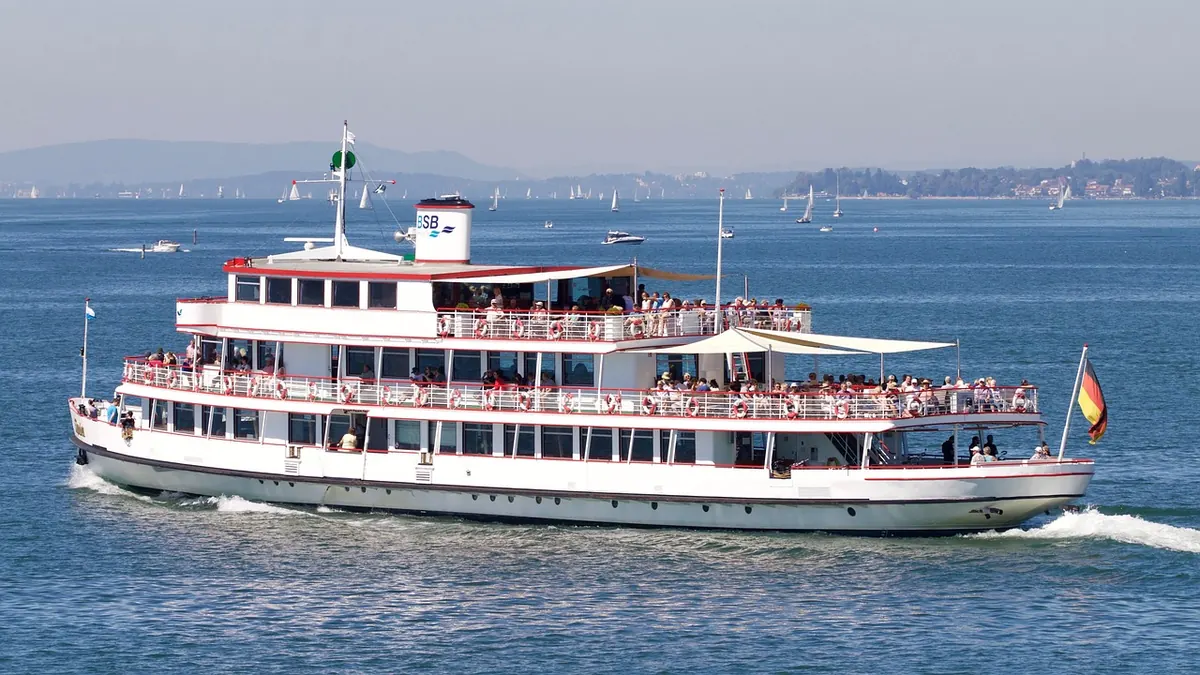

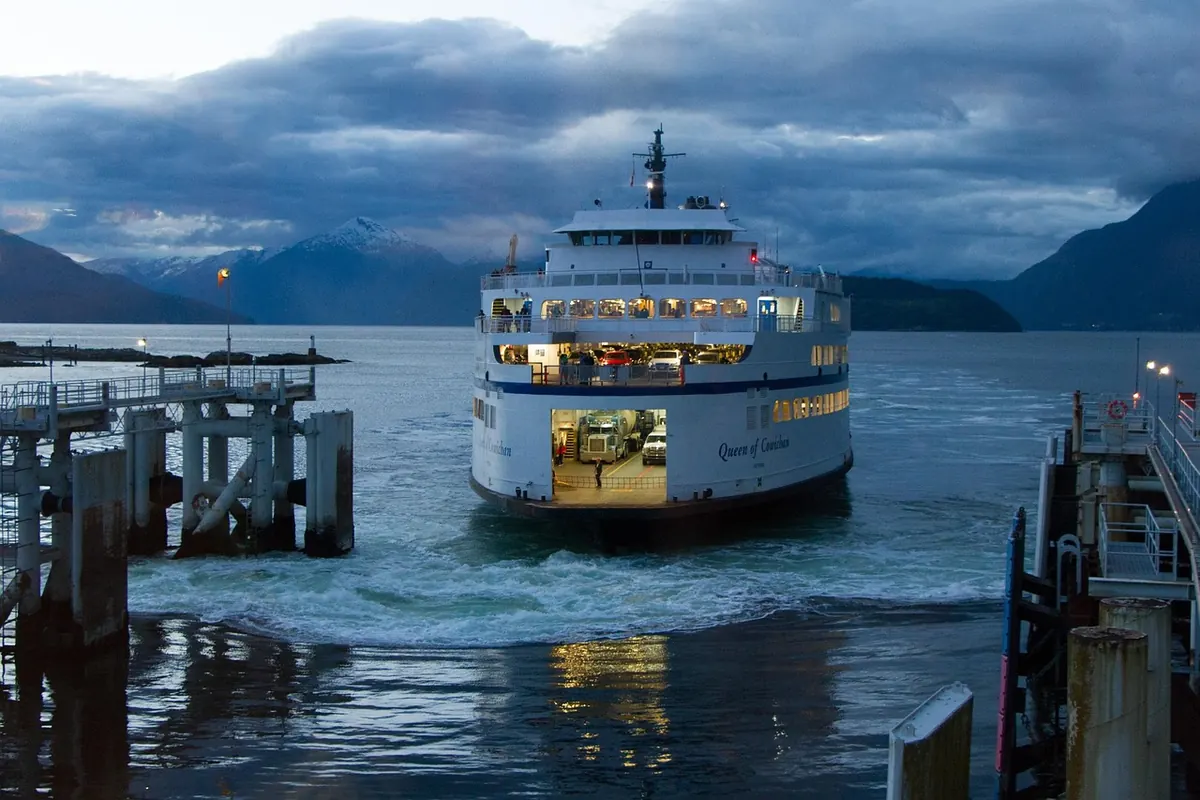

The Isle of Wight is one of the few places in Britain where you can arrive by sea without having driven a mile of it. Leave the car at home and the crossing stops being a chore and starts being part of the trip: a short hop over the Solent, a pier to walk down, and a seaside town waiting at the far end. That is the theory. In practice, how pleasant the experience is depends heavily on which route you choose, and a little local knowledge saves a lot of standing about wondering where to go.
Here is what the journey actually looks like, from the moment you reach the terminal to the moment you step off the pier.
Which crossing suits you
The foot passenger options are not interchangeable, and picking the right one is half the battle. Think about where you are starting on the mainland and where you want to end up on the island.
- Portsmouth Harbour to Ryde Pier Head (Wightlink FastCat). The easiest option if you arrive by train, because the terminal sits right beside Portsmouth Harbour station. About 20 to 25 minutes on the water.
- Southsea to Ryde Esplanade (Hovertravel). The hovercraft, roughly ten minutes door to door, and the only crossing where you skim over the waves rather than through them.
- Southampton Town Quay to Cowes (Red Funnel Red Jet). A fast catamaran of around 25 minutes, and the natural choice if you want Cowes, Newport or the west of the island.
- Lymington to Yarmouth and Portsmouth to Fishbourne (Wightlink car ferries). Foot passengers are welcome on both. Slower and calmer, at roughly 40 to 45 minutes, and Yarmouth lands you directly in a town.
As a rule of thumb: Ryde for the east and north, Cowes for the west, Yarmouth for the far west and its quieter beaches. Fishbourne is the least convenient for anyone on foot, since you will need a bus or taxi onwards to Ryde or Newport.
At the terminal
Foot passengers get a much better deal than drivers. There is no lane to queue in, no long check-in window and no need to arrive an hour early. Fifteen or twenty minutes before departure is plenty on most routes, and ten will usually do outside peak summer weekends.
Portsmouth Harbour is the most straightforward: the FastCat terminal is a couple of minutes' walk from the railway station, with a covered route for much of it. Southampton is less immediate. Town Quay is a walkable 20 minutes or so from Southampton Central, but with bags it is worth a taxi or a local bus. At Lymington and Yarmouth the terminals are small and easy to read, and both sit close to the town.
Staff are used to people turning up confused. If you are not sure which queue you are in, ask — the foot passenger flow is usually obvious once someone points at it.
Boarding and the crossing
Boarding normally opens ten to fifteen minutes before departure, and foot passengers go on last on the car ferries, after the vehicles. It is a walk down a ramp or gangway, sometimes with steps, so if you are wheeling a heavy case, take your time. Bicycles are usually carried but numbers are limited, so it is worth checking and reserving ahead.
Once aboard, head up rather than down. The upper decks give you the best of the crossing: Portsmouth's harbour mouth and the forts on one side, the green spine of the island growing closer on the other, and often a yacht race to watch if the tide and wind are cooperating. The Hovercraft is the exception to all of this — you are strapped in, the engines roar, and you are there before you have settled.
On board
Set your expectations to "ferry", not "cruise". Seating is comfortable enough, there are toilets, and there is usually something warm to drink, though onboard catering is limited and varies between vessels. On a ten-minute hovercraft crossing, do not factor in a coffee at all. If you are travelling with children, a snack in your bag is a sensible insurance policy.
Luggage is generally a case of carrying your own and keeping it with you; there is rarely a formal weight limit on foot passenger services, but there is also rarely anyone to help. Dogs are welcome on most foot passenger crossings, sometimes free and sometimes for a small charge, so check the operator's rules before you book. Step-free access varies from terminal to terminal and vessel to vessel, so if you have mobility needs, ring ahead rather than assuming.
From pier to town
Ryde Pier is the detail that catches people out. It is the best part of half a mile long, and walking it takes a good ten minutes in fine weather and considerably longer in a Solent headwind with rain coming sideways. The Island Line train runs along the pier itself and stops at Ryde Esplanade and St John's Road, which is worth knowing when the weather is grim.
The hovercraft, by contrast, lands you at Ryde Esplanade, right in the middle of things. In Cowes, the Red Jet berths at West Cowes; if you are heading for East Cowes, use the Floating Bridge chain ferry across the Medina. Yarmouth's terminal is a couple of minutes from the high street, which makes it the most civilised arrival of the lot.
Is it good value?
For a foot passenger, yes. Fares are a fraction of the cost of taking a car, and the crossings are short enough that you are paying for convenience rather than endurance. Off-peak day returns and advance bookings tend to be the cheapest way to travel, and prices rise sharply on summer weekends and around festival dates, so book early if your dates are fixed.
On some routes, through tickets covering the mainland train, the ferry and the Island Line are available, which can be cheaper and simpler than buying each leg separately. Ask at a staffed railway station before you book online. It is also worth remembering that the hovercraft and the fast catamarans can be suspended in poor weather; foot passengers have the advantage of being able to switch routes far more easily than drivers, so keep an eye on the forecast.
Before you travel: a quick checklist
- Check which mainland terminal matches your starting point — Portsmouth, Southampton, Lymington and Southsea serve different parts of the island.
- Book ahead for summer weekends, and look at day returns versus singles.
- Arrive 15 to 20 minutes before departure; there is no need for the car ferry buffer.
- Pack a layer. The Solent wind does not care that it was sunny when you left home.
- Have a plan for the last stretch — the pier walk, the Floating Bridge, or a bus from Fishbourne.
- Confirm bicycle space, dog rules and accessibility with the operator in advance.
Do that much, and the crossing becomes the easy part of the day. Done well, arriving by sea is the memory people keep: the pier ahead, the island green behind it, and no car park in sight.
Photo: FotoEmotions / Pixabay